
Cold Plunge for Athletes in Ottawa: Evidence-Based Guide | Nobility Performance
May 5, 2026
Red Light Therapy for Anti-Aging in Ottawa: What the Research Actually Shows
May 6, 2026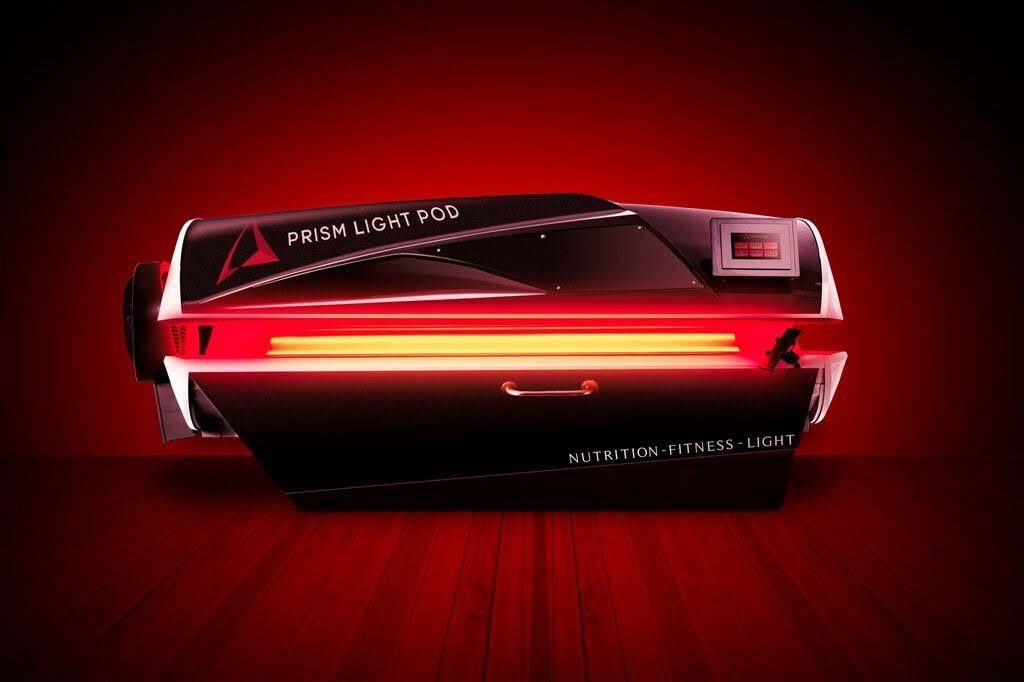
Red light therapy has had a strange five years.
It went from “the thing dermatologists quietly recommend for skin texture” to “the thing every wellness influencer with a panel and a ring light insists is the secret to longevity.” Somewhere in between, the actual research got buried under a lot of marketing — and most of what’s said about red light on the internet today is two parts overstatement to one part real evidence.
That’s a shame, because the underlying science is genuinely interesting. Photobiomodulation — the clinical term for what happens when red and near-infrared light interacts with your cells — has a growing peer-reviewed evidence base that’s stronger in some applications (skin, hair growth) than others (cardiovascular, cognitive), and the difference matters if you’re deciding whether to invest your time and money in it.
This is the comprehensive guide: what red light therapy actually does, the research domain by domain, what protocols are supported by the data, and where the marketing has run ahead of the evidence.
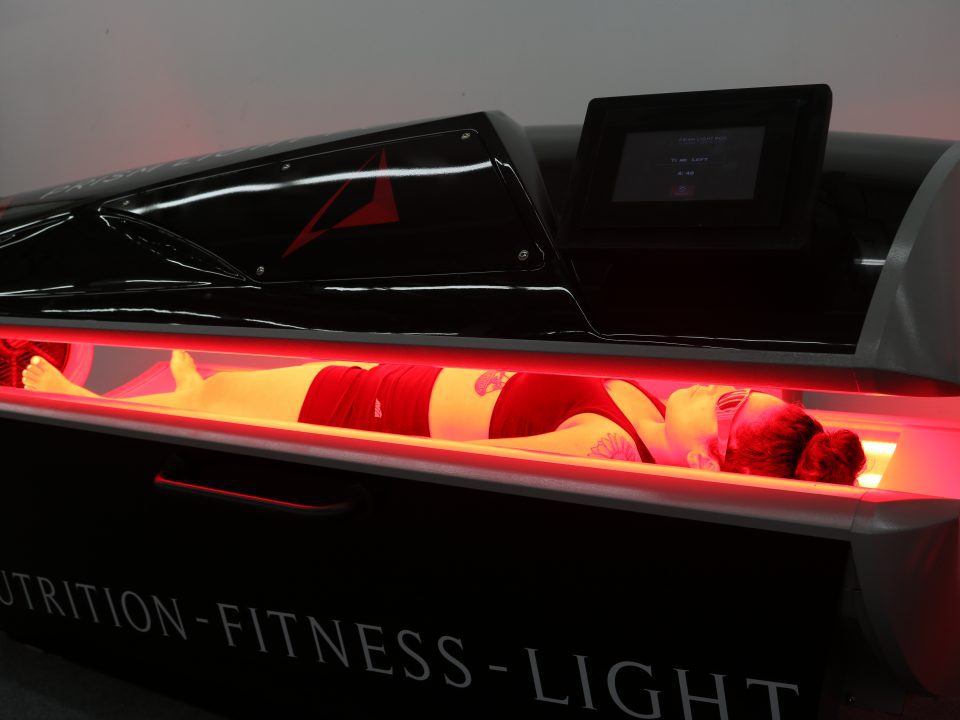
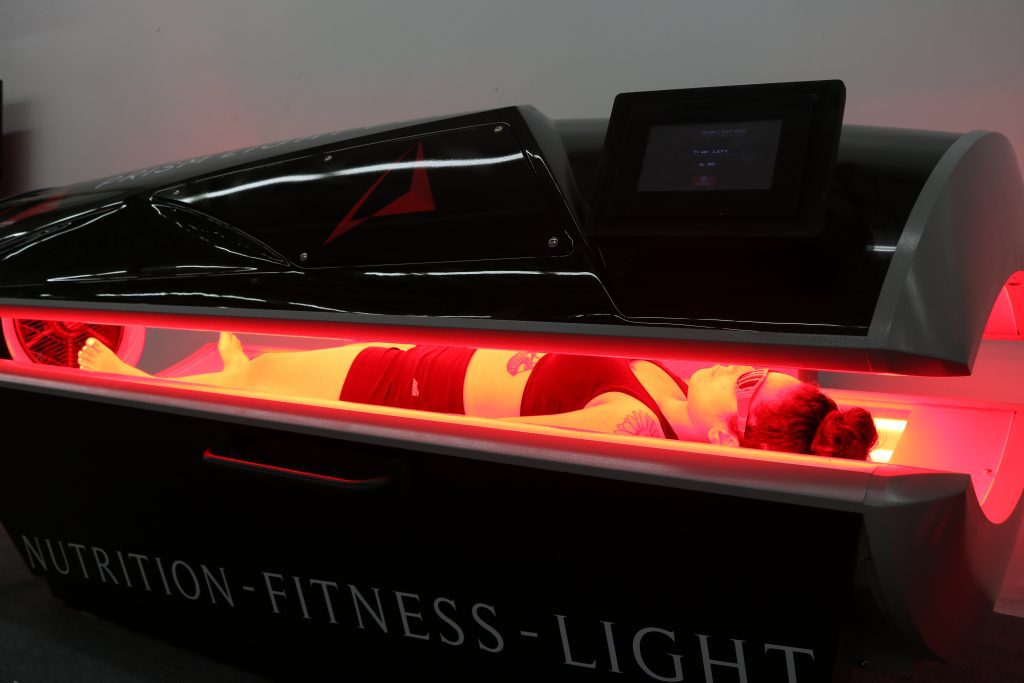
At Nobility Performance, we run our full-body Prism Light Pod — a 15-minute treatment that delivers therapeutic red and near-infrared light to every square inch of skin at once. This post is the science behind why that’s the modality we chose to invest in.
What photobiomodulation actually is (mechanism)
Strip away the marketing language and red light therapy is one specific thing: photobiomodulation (PBM), the application of red (620–700nm) and near-infrared (700–1440nm) wavelengths to skin and tissue at therapeutic doses.[1]
At those wavelengths, light penetrates skin and tissue and gets absorbed by cytochrome C oxidase — an enzyme inside your mitochondria, the energy factories of your cells. That absorption triggers a measurable cellular cascade:[1][2]
- Increased mitochondrial ATP production. Cells get more energy to do their jobs — including the slow, expensive ones like collagen synthesis, tissue repair, and hair growth.
- Modulation of reactive oxygen species and intracellular calcium, both implicated in cellular aging and inflammation.
- Upregulation of collagen synthesis and growth factors, alongside downregulation of matrix metalloproteinases (MMPs) — the enzymes that break down the structural proteins in skin and connective tissue.
- Activation of growth and repair pathways (PI3K, IGF) that drive cellular proliferation and tissue rebuilding.
A 2025 NIA workshop review in GeroScience concluded that PBM holds significant potential as a safe and effective therapeutic approach for a wide range of age-related conditions, while emphasizing the need for further protocol-optimization research.[3]
In plain English: at the right wavelengths, light shifts cells from a degradation-dominant state to a repair-and-build state. That’s the underlying reason PBM produces effects across so many domains — skin, hair, recovery, cognition — and it’s also why protocols vary so much depending on what you’re trying to treat.
The evidence: skin and anti-aging
Skin rejuvenation is where PBM has the strongest, most consistent clinical evidence to date.[4] A few of the more relevant studies:
- Wrinkle reduction in women aged 45–60. A 2025 randomized, sham-controlled, double-blind trial (n=95) using a 660nm LED device found significant reductions in glabellar and periorbital wrinkle length, with patient satisfaction rates of 74–80%. Notably, two sessions per week was sufficient — three sessions per week didn’t produce additional benefit.[5]
- Measurable changes in skin biology. A pulsed 660nm LED study demonstrated a 31% increase in type-1 procollagen and an 18% reduction in MMP-1 in tissue-engineered skin, with over 90% of treated participants showing reduced wrinkle depth clinically.[6]
- 27% wrinkle reduction over 12 weeks in a separate broad-spectrum near-infrared LED trial, alongside improvements in skin elasticity, moisture, and density.[7]
- Effects on cellular senescence. A 2025 systematic review proposed that PBM may reduce the burden of senescent cells in skin — a hormesis-driven mechanism the authors describe as promoting “skin anti-fragility and longevity.”[8]
This is the domain with randomized trials, measurable biological changes, and consistent results across studies. It’s also the most popular use case for full-body PBM at our clinic.
For the deeper read on red light for skin and longevity — including who it’s for, the full protocol breakdown, and the specific differences between full-body and at-home devices — see our dedicated post on red light therapy for anti-aging.
The evidence: recovery, inflammation, and tissue repair
This is the application most relevant to athletes and active populations — and the one where the mechanism is well-established but the direct sport-recovery RCT evidence is still developing.
What we know from mechanism:
- PBM reduces inflammation via the same pathways that drive its anti-aging effects — modulation of reactive oxygen species, downregulation of pro-inflammatory signalling.[1]
- PBM accelerates tissue repair. The clinical evidence for wound healing — its earliest medical application — is strong, and the same mechanisms support faster recovery from soft-tissue training stress.[4]
- PBM increases mitochondrial ATP production. Cells with more energy do repair work faster.[2]
What we don’t yet have: a dense library of large-scale RCTs specifically on PBM for athletic recovery the way we do for cold water immersion. The field is younger and the protocols vary widely.
The honest position: athletes who use PBM consistently report meaningful effects on recovery between sessions, and the cellular mechanisms strongly support those effects, but the direct sport-recovery evidence base is still maturing. That’s not a knock — it’s where the research is.
For most active populations, PBM earns its place in a stacked recovery routine alongside cold water immersion and pneumatic compression rather than as a standalone solution. See our recovery stack guide for how to combine the modalities effectively, or our cold plunge pillar post for the cold-side companion.
The evidence: hair growth in androgenetic alopecia
Hair loss is the application with the second-strongest clinical evidence, after skin.
- A meta-analysis of 38 studies (n=3,098) found low-level laser and LED therapy significantly increased hair density compared to placebo in androgenetic alopecia, with effect sizes of 1.14–1.44 depending on treatment duration.[9]
- A multicenter randomized, double-blind, sham-controlled trial (n=60) using a helmet-type 655nm device showed a 41.9 hairs/cm² density increase at 16 weeks versus 0.72 hairs/cm² in sham controls.[10]
Worth noting: the strongest hair-loss evidence is for helmet-type devices specifically designed for the scalp, not for general full-body PBM. If hair regrowth is your primary goal, a dedicated helmet device is the better-supported tool. Full-body PBM may produce some scalp benefit alongside its other effects, but the research isn’t as direct.[11]
The evidence: cognitive function and the aging brain
This is one of the more rapidly growing research areas in PBM, and the early results are promising — though the protocols are different from skin and recovery applications.
- A systematic review and meta-analysis of 11 RCTs found PBM had a significant moderate effect on global cognition (SMD = 0.51) in aging adults, with multi-wavelength and laser-based protocols showing the strongest effects.[12]
- A 2023 imaging study using ³¹P magnetic resonance spectroscopy demonstrated a measurable increase in ATP synthase flux in the brains of older adults after 670nm transcranial PBM — direct evidence of improved mitochondrial function in living human brains.[13]
- A broader systematic review spanning animal models to humans found PBM improved spatial memory, working memory, and cognitive inhibition in aged subjects, with neuroprotective and anti-inflammatory effects observable in brain tissue.[14]
Important caveat: these effects are produced by transcranial PBM — light delivered specifically to the head, not full-body therapy. Whether full-body PBM produces meaningful cognitive effects is a separate, less-studied question. If cognitive function is the primary goal, a dedicated transcranial protocol is the better-supported tool.
The evidence: eye health and macular degeneration
This is the domain with arguably the most clinically meaningful recent data — though again, with very specific protocols.
The LIGHTSITE III trial — a 24-month, double-masked, randomized, sham-controlled study (n=148 eyes) — met its primary efficacy endpoint with a +6.2 letter improvement in best-corrected visual acuity at 21 months. Critically, progression to geographic atrophy was significantly reduced in the PBM group (6.8% vs. 24.0% in sham, p = 0.007), suggesting potential disease-modifying effects in intermediate dry age-related macular degeneration.[15]
A Cochrane review noted growing preclinical evidence for PBM in retinal aging, while calling for additional rigorous clinical data.[16] An independent short-term study showed improvements in visual acuity and drusen volume reduction at 12 weeks, though benefits weren’t sustained at 6 months without continued treatment.[17]
Worth being clear: this is a specific medical application using specific ocular PBM devices, delivered in clinical settings — not something you do in a full-body pod. We mention it here only because it’s relevant to the broader case for PBM as a therapeutic modality. If you have AMD or are concerned about retinal aging, that’s a conversation with an ophthalmologist, not a wellness clinic.
Beyond skin, hair, and longevity: the rest of the research landscape
The research base extends further than the applications above, though much of it is still preclinical or early-stage:
- Cardiovascular aging. A study in an animal model of accelerated cardiac aging found that daily 850nm near-infrared PBM over 8 months significantly reduced left ventricular hypertrophy, improved ejection fraction, and improved survival (100% PBM vs. 43% control). These findings are striking but remain preclinical and require human validation.[18]
- Sleep. Anecdotal and small-scale evidence suggests PBM may support sleep quality through several proposed mechanisms, including circadian effects and reduced inflammation. The research is still early. See our post on red light therapy for sleep for more.
- Wound healing. The original and most established medical application of PBM, with decades of evidence supporting use in clinical settings.
Protocols by goal
One of the most-asked questions about red light therapy is “how often and how long” — and the right answer depends entirely on what you’re using it for.
| Goal | Frequency | Duration / phase | Device type |
|---|---|---|---|
| Skin and anti-aging | 2x / week | Loading 8–12 weeks, then 1x / week maintenance | Full-body or face-targeted |
| Recovery and tissue support | 2–3x / week | Ongoing with hard training | Full-body for whole-system effects |
| Hair growth (AGA) | 3–5x / week | Loading 16+ weeks, then maintenance | Helmet-type, scalp-targeted |
| Cognitive function | 3x / week | Variable across studies | Transcranial, head-targeted |
| General wellness / longevity | 2x / week minimum | Ongoing | Full-body |
The 2025 RCT in women aged 45–60 found that two sessions per week was sufficient for skin improvements, and that adding a third session didn’t improve outcomes.[5] That finding has implications across applications: PBM is dose-dependent in the sense that consistency matters more than intensity, but there’s a ceiling above which extra sessions don’t add benefit.
Device types — what actually matters
The PBM market is full of devices and most marketing focuses on irrelevant features. The two variables that actually matter:
- Coverage. A device that treats your face is doing different work from one that treats your whole body. If your goal is full-body recovery and longevity effects, surface area matters — and most face masks, panels, and handheld devices simply can’t deliver the dose at scale.
- Power density (irradiance). Most at-home devices operate at lower power densities than what’s required for therapeutic effects in deeper tissues. A panel that produces visible red light isn’t necessarily delivering a clinically meaningful dose.
The honest hierarchy:
- Full-body beds and pods — clinical-grade dose, full surface area, best for general anti-aging, recovery, and longevity protocols.
- Helmets — best-evidenced for hair growth specifically; not appropriate substitutes for full-body therapy.
- Panels — useful for targeted applications (a specific joint, a specific area of skin). Mechanically can’t replace full-body dose.
- Face masks — useful for face-specific skin protocols. Won’t reach the rest of you.
- Handheld devices — fine for very localized applications. Not a serious investment in PBM as a practice.
We invested in the Prism Light Pod specifically because coverage and dose are the variables the research keeps coming back to, and a pod is the only form factor that delivers a clinical dose to your entire body in a 15-minute window.
What the research doesn’t yet prove
Worth being upfront about:
- Protocols vary widely across studies — wavelength, dose, frequency, and session duration aren’t yet standardized.[4][14]
- LED-based vs. laser-based devices haven’t been definitively compared, though both have positive trial data.[4]
- Cardiovascular effects are preclinical only. The mouse data is striking; human clinical trials don’t yet exist.[18]
- Effects on several applications appear to require ongoing treatment to maintain. Stop entirely, and benefits gradually reverse.[15][17]
- Industry-funded studies are common in PBM research — worth knowing when reading any single trial.[4][11]
None of these caveats change whether PBM is worth using. They change how you use it, and which claims to take seriously.
Safety
PBM has an excellent safety profile across the published research. Mild, self-limiting redness is the most common adverse effect, and serious adverse events are rare.[1]
A few situations to flag with your provider before starting:
- Use of photosensitizing medications (some antibiotics, certain skincare actives, some psychiatric medications).
- Active skin cancer or unidentified pigmented lesions in the treatment area.
- Pregnancy — not because PBM is known to be unsafe, but because the research base in pregnant populations is limited.
- Specific eye conditions, especially if pursuing transcranial protocols.
⭐⭐⭐⭐⭐
First time trying Red Light Therapy (Photobiomodulation) and I’m hooked! Felt so relaxed and recharged after. Mike was amazing, super knowledgeable and made the whole experience even better. Highly recommend!
Common questions
How is the Prism Light Pod different from at-home red light masks or panels?
Coverage and dose. Most at-home devices treat a small area at a time, often at lower power densities than what’s required for deeper tissue effects. A full-body pod delivers a clinical-grade dose to your entire body in one session.
Will I get a tan?
No. PBM uses red and near-infrared wavelengths — completely separate from the UV-A and UV-B light that tan or burn skin.
How fast will I see results?
Depends on the application. Skin tone and brightness changes typically appear within 2–3 weeks of consistent use. Texture and firmness changes (collagen-driven) take 8–12 weeks. Hair changes take 16+ weeks. Recovery effects can be felt session-to-session but compound over weeks.
Can I combine red light with other treatments?
Almost always yes. PBM tends to enhance other treatments — topical actives, manual therapy, microneedling — rather than conflict with them. Our recovery stack guide walks through the most effective combinations.
Is it covered by insurance?
Generally not. PBM is considered a wellness service rather than a covered medical treatment. Session packages bring the per-session cost down significantly for anyone committing to a loading phase.
How do I book?
Book a PBM session online, or reach out to the team with questions.
Why Nobility Performance
- our full-body Prism Light Pod. Most PBM in the city is single-panel or face-mask scale.
- Multidisciplinary support. Chiropractic, physiotherapy, RMT, FST, shockwave, cold immersion, dietetics, and PBM are all under the same roof. Recovery and longevity don’t exist in isolation.
- Evidence-based, not aspirational. We tell you what the research supports, where it’s strong, and where it’s still developing. No oversell.
- Dedicated PBM education site. For deeper reading on specific applications, we maintain a separate education resource.
The bottom line
Photobiomodulation is one of the more promising non-invasive therapeutic modalities to emerge in the past decade. The evidence is strongest for skin and hair, growing for cognitive and ocular applications, and developing for recovery — all built on a well-established cellular mechanism.
It’s not a miracle. It won’t fix bad sleep, poor nutrition, chronic stress, or a training program that doesn’t include rest. It works best as one piece of a larger practice — used consistently, alongside the rest of what your body needs.
For the right person, with the right protocol, used in the right context: it’s a real tool, with real research behind it, that does real work at the cellular level.
Ready to try it?
Book a 15-minute full-body PBM session at Nobility Performance, or ask us about loading-phase packages if you’re committing to a longer protocol.
Looking for the deeper read on specific applications?
- Red light therapy for anti-aging and skin
- Red light therapy for sleep
- The full recovery stack — PBM, cold plunge, and compression
- Cold water immersion: the evidence-based guide
Try full-body red light therapy at Nobility Performance.
References
- Maghfour J, Ozog DM, Mineroff J, et al. Photobiomodulation CME Part I: Overview and Mechanism of Action. J Am Acad Dermatol. 2024;91(5):793-802. doi.org/10.1016/j.jaad.2023.10.073
- de Freitas LF, Hamblin MR. Proposed Mechanisms of Photobiomodulation or Low-Level Light Therapy. IEEE J Sel Top Quantum Electron. 2016;22(3):7000417. doi.org/10.1109/JSTQE.2016.2561201
- Frankowski DW, Ferrucci L, Arany PR, et al. Light Buckets and Laser Beams: Mechanisms and Applications of Photobiomodulation (PBM) Therapy. GeroScience. 2025;47(3):2777-2789. doi.org/10.1007/s11357-025-01505-z
- Glass GE. Photobiomodulation: The Clinical Applications of Low-Level Light Therapy. Aesthet Surg J. 2021;41(6):723-738. doi.org/10.1093/asj/sjab025
- Bragato EF, Paisano AF, Pavani C, et al. Role of Photobiomodulation Application Frequency in Facial Rejuvenation: Randomized, Sham-Controlled, Double-Blind, Clinical Trial. Lasers Med Sci. 2025;40(1):170. doi.org/10.1007/s10103-025-04383-1
- Barolet D, Roberge CJ, Auger FA, et al. Regulation of Skin Collagen Metabolism in Vitro Using a Pulsed 660nm LED Light Source. J Invest Dermatol. 2009;129(12):2751-9. doi.org/10.1038/jid.2009.186
- Kim JH, Seo J, Koh A, et al. Clinical Application of a New Near-Infrared LED for Skin Rejuvenation and Hair Growth Enhancement. Aesthetic Plast Surg. 2026;50(7):2743-2751. doi.org/10.1007/s00266-025-05476-6
- Kelm RC, Murphrey MB. The Impact of Lasers and Energy-Based Devices on Cellular Senescence: A Systematic Review. Lasers Surg Med. 2025. doi.org/10.1002/lsm.70079
- Perez SM, Vattigunta M, Kelly C, Eber A. Low-Level Laser and LED Therapy in Alopecia: A Systematic Review and Meta-Analysis. Dermatol Surg. 2025;51(2):179-183. doi.org/10.1097/DSS.0000000000004442
- Yoon JS, Ku WY, Lee JH, Ahn HC. Low-Level Light Therapy Using a Helmet-Type Device for AGA: A 16-Week Multicenter RCT. Medicine. 2020;99(29):e21181. doi.org/10.1097/MD.0000000000021181
- Gupta AK, Taylor D, Nouri K. Lasers for Treatment of Androgenetic Alopecia: An In-Depth Analysis. Lasers Med Sci. 2025;40(1):108. doi.org/10.1007/s10103-025-04365-3
- Gao Y, An R, Huang X, et al. Effectiveness of Photobiomodulation for People With Age-Related Cognitive Impairment. Lasers Med Sci. 2023;38(1):237. doi.org/10.1007/s10103-023-03899-8
- Fear EJ, Torkelsen FH, Zamboni E, et al. Use of ³¹P MRS to Measure ATP Changes After 670nm Transcranial PBM in Older Adults. Aging Cell. 2023;22(11):e14005. doi.org/10.1111/acel.14005
- Rodríguez-Fernández L, Zorzo C, Arias JL. Photobiomodulation in the Aging Brain: A Systematic Review. GeroScience. 2024;46(6):6583-6623. doi.org/10.1007/s11357-024-01231-y
- Jaffe GJ, Boyer D, Hu A, et al. Long-Term Efficacy and Safety of Photobiomodulation in Dry AMD (LIGHTSITE III: 24-Month Analysis). Retina. 2026;46(5):783-795. doi.org/10.1097/IAE.0000000000004822
- Henein C, Steel DH. Photobiomodulation for Non-Exudative Age-Related Macular Degeneration. Cochrane Database Syst Rev. 2021;5:CD013029. doi.org/10.1002/14651858.CD013029.pub2
- Nassisi M, Mainetti C, Paparella GR, et al. Short-Term Efficacy of Photobiomodulation in Early and Intermediate AMD: The PBM4AMD Study. Eye (Lond). 2024;38(18):3467-3472. doi.org/10.1038/s41433-024-03326-4
- Syed SB, Ahmet I, Chakir K, et al. Photobiomodulation Therapy Mitigates Cardiovascular Aging and Improves Survival. Lasers Surg Med. 2023;55(3):278-293. doi.org/10.1002/lsm.23644