Why Choose Professional-Grade Red Light Therapy? The Prism Light Pod Experience at Nobility Performance
January 12, 2026
Cold Plunge for Athletes in Ottawa: Evidence-Based Guide | Nobility Performance
May 5, 2026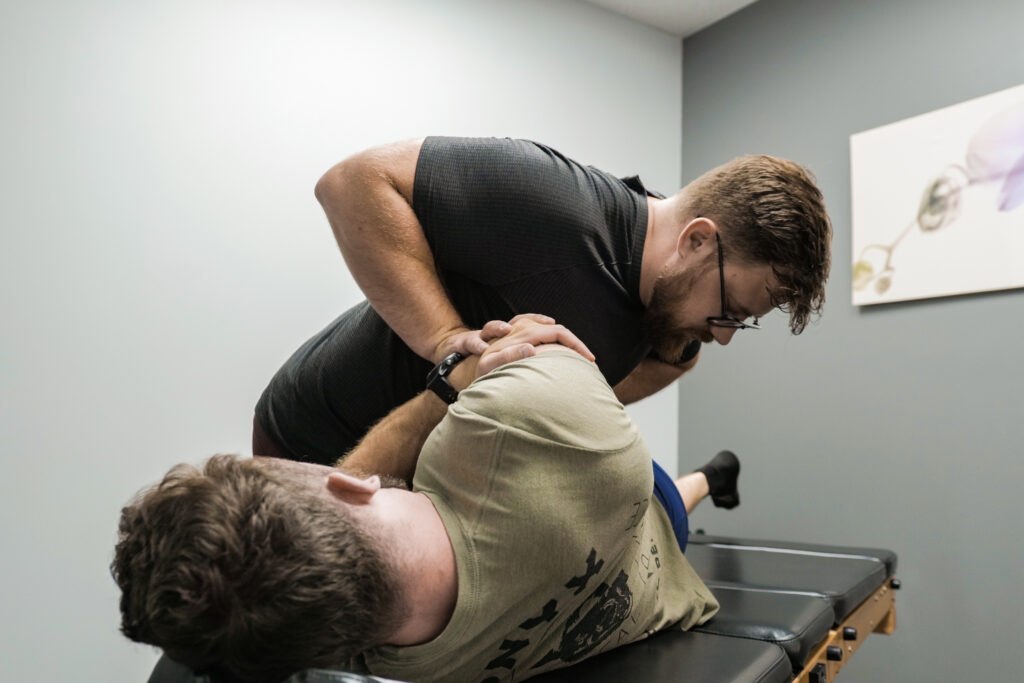
`A no-BS guide from someone who’s biased (but at least admits it)
You tweaked something. Maybe it was that last set of deadlifts. Maybe it was the pickup hockey game you had no business playing in. Maybe you sneezed weird — it doesn’t matter, something hurts and now you’re staring at your phone trying to figure out who to call.
Chiropractor? Physiotherapist? Massage therapist? Your buddy Dave says his chiro “changed his life.” Your coworker says physio is “the only real option.” Your partner just wants you to stop complaining.
Here’s the thing: they’re all wrong. And they’re all right. It depends.
I’m Dr. Bryan, a chiropractor and co-owner of Nobility Performance in Stittsville — so yes, I have a bias here. But I also run a clinic with chiropractors, physiotherapists, AND registered massage therapists under one roof, so my bias is basically “come see us and we’ll figure it out together.” Which, honestly, is the right answer most of the time. But let me actually explain the differences so you can make an informed call.
What Each Practitioner Actually Does
Chiropractor: The Joint Mechanic
Chiropractors focus on how your joints move — especially your spine, but not only your spine. If a joint is stuck, restricted, or not moving the way it should, that’s our wheelhouse.
Think of it like this: if your body were a door, and the door wasn’t swinging right, the chiropractor is the one checking the hinges.
You probably want a chiro when:
- Your back “went out” and you’re walking like you’re 90 years old
- You’ve got a sharp, specific pain when you move a certain way
- Something feels “stuck” or locked up
- Your pain is coming from a joint — spine, SI, shoulder, hip
- You want someone to assess your movement and figure out why things keep breaking down
- You’re an athlete looking to maintain performance (not just fix problems)
What a visit looks like: We assess how you move, find the joints that aren’t doing their job, and restore motion — usually with an adjustment (that popping sound your spine makes is not it breaking, I promise). Depending on the chiropractor, you might also get soft tissue work, exercise prescription, and a look at the bigger picture of why it happened in the first place.
Physiotherapist: The Rehab Architect
Physiotherapists are the masters of rehabilitation and functional movement. Where a chiro might get the joint moving again, a physio builds the strength and stability around it so it stays moving.
Same door analogy: the physio is the one strengthening the frame around the hinges so the whole thing doesn’t sag again.
You probably want a physio when:
- You’re coming back from surgery or a significant injury
- You’ve got a repetitive strain injury (tennis elbow, runner’s knee, rotator cuff issues)
- You need a structured rehab program with progressive exercises
- Your pain is more muscular or tendon-related than joint-related
- You know what’s wrong but need a plan to get back to full function
- You’ve been told you need to “strengthen” something but have no idea where to start
What a visit looks like: Assessment, hands-on treatment, and — the big one — a tailored exercise program. A good physio gives you homework. If you’re not leaving with exercises to do on your own, ask questions.
Registered Massage Therapist (RMT): The Soft Tissue Specialist
RMTs work on the muscles, fascia, and soft tissue. They’re not just about relaxation (though that’s a perfectly valid reason to book one). Therapeutic massage treats muscle tension, trigger points, adhesions, and the general beat-up feeling that comes from training hard or sitting at a desk for 8 hours a day.
Door analogy one more time: the RMT is the one oiling everything around the hinges and the frame so the whole system moves smoothly.
You probably want an RMT when:
- Your muscles are tight, knotted, or feel like concrete
- You’ve got tension headaches from your neck and shoulders
- You’re training hard and need recovery support between sessions
- You’ve got chronic tension from posture, stress, or repetitive work
- You want to maintain soft tissue health as part of your overall routine
- Honestly? When everything just hurts and you need someone to work it out
What a visit looks like: Hands-on soft tissue work — deep tissue, trigger point therapy, myofascial release, or relaxation massage depending on what you need. A good RMT will also tell you when what they’re feeling under their hands is beyond massage and you should see a chiro or physio instead.
The Real Answer: It’s Usually Not Just One
Here’s what most clinics won’t tell you because they only offer one service: your body doesn’t care about professional designations. Your problem doesn’t fit neatly into a “chiro problem” or a “physio problem” box.
Tweaked your back deadlifting? The joint might need an adjustment (chiro), the surrounding muscles are probably in spasm (RMT), and the reason it happened — weak core, poor hip mobility, bad bracing pattern — needs to be addressed with rehab (physio).
That’s not three separate problems. That’s one problem with three layers.
This is actually why we built Nobility Performance the way we did. Not because having more practitioners makes us look impressive on a website, but because most musculoskeletal problems need more than one set of hands to fix properly. When your chiro, physio, and RMT are in the same building, talking to each other about your case, you get better faster. It’s not complicated — it’s just not how most clinics are set up.
“But What If I Just Pick Wrong?”
Honestly? It’s hard to go truly wrong here. Any regulated health professional worth their designation will tell you if you’re in the wrong chair. A good chiro will refer you to physio. A good physio will tell you to see a chiro. A good RMT will flag something that needs more investigation.
The worst thing you can do isn’t picking the “wrong” one. The worst thing you can do is pick nobody and keep training through it until a small problem becomes a big one.
If your shoulder has been “a little off” for six weeks — it’s not a little off anymore. If you’re popping ibuprofen before every workout — that’s not a warm-up supplement. If you haven’t been able to squat to depth in months and you’ve just been “working around it” — you’re building compensations on top of compensations.
Stop Googling. Start booking.
The Quick-Reference Version
| Your situation | Start with |
|---|---|
| Sharp pain, something feels stuck or locked | Chiropractor |
| Coming back from surgery or major injury | Physiotherapist |
| Muscles feel like concrete, tension headaches | RMT |
| Repetitive strain (elbow, knee, shoulder) | Physio or chiro — either can assess |
| “Everything hurts and I’m tired” | RMT first, then reassess |
| Training hard, want to stay ahead of injuries | All three, rotating as needed |
| Honestly don’t know what’s wrong | Any of the three — we’ll sort you out |
One Roof. One Team. Your Move.
At Nobility Performance, we don’t make you guess. Book in, tell us what’s going on, and we’ll get you in front of the right practitioner — or the right combination of practitioners — for what you actually need.
No referral required. No guessing games. Just people who lift, train, and move helping other people who lift, train, and move.
[Book Your Visit →] nobilityperformance.janeapp.com
Dr. Bryan is a chiropractor and co-owner of Nobility Performance in Stittsville, Ontario. He uses Applied Kinesiology and drinks more pumpkin spice lattes than any healthcare professional probably should. He is not sorry about either of these things.
